![[back]](/assets/home_24dp_E3E3E3_FILL0_wght400_GRAD0_opsz24.svg "[back]")
![[search]](/assets/search_24dp_E3E3E3_FILL0_wght400_GRAD0_opsz24.svg "[search]")
Golden Fleece
- Background story.
- Surface interpretation.
- Mystery interpretation.
- Discussion
- In Myth and Lore
- Is Nephelē related to Nephilim?
- Syncretism into later traditions
- See also
Background story.
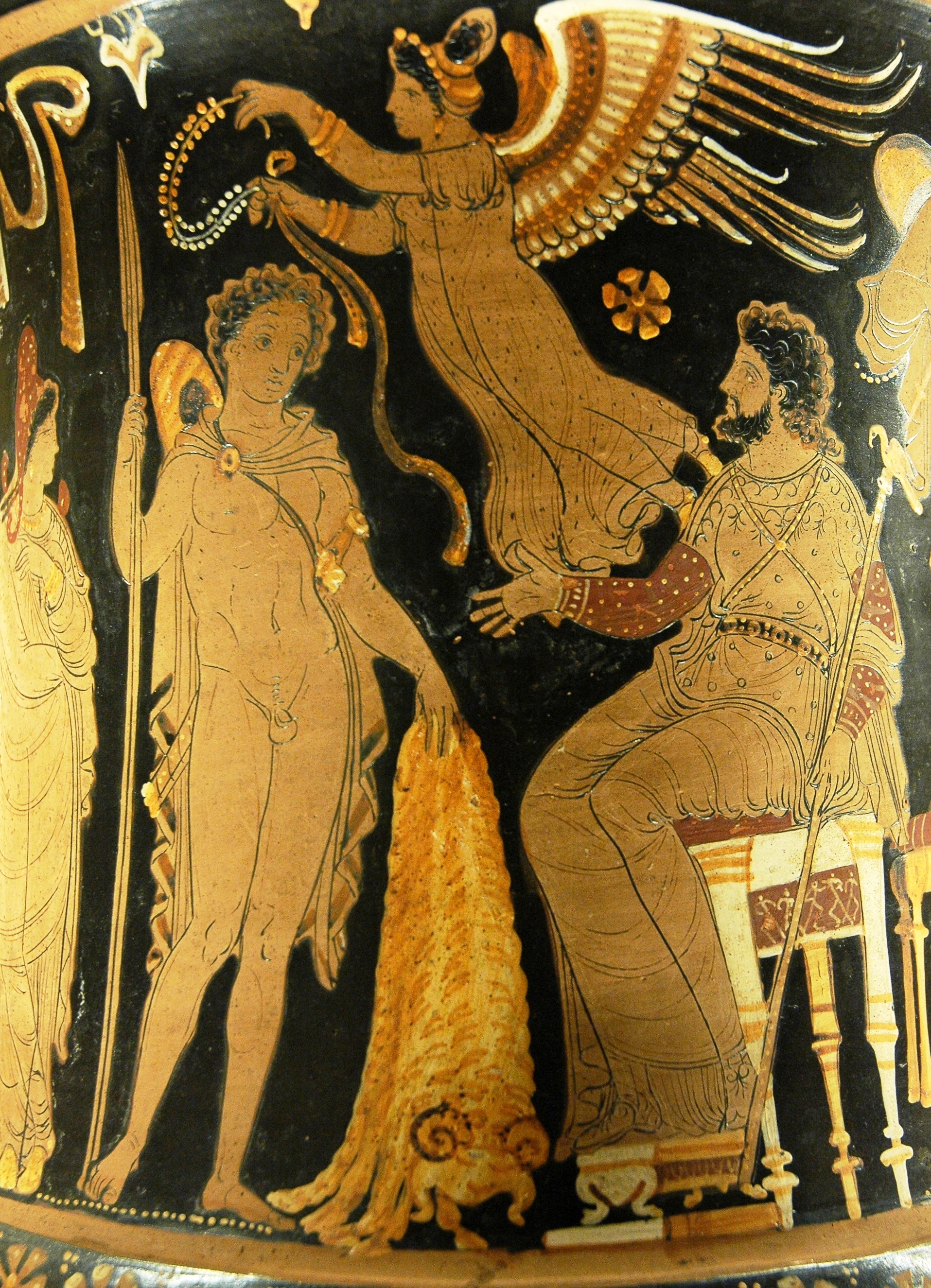
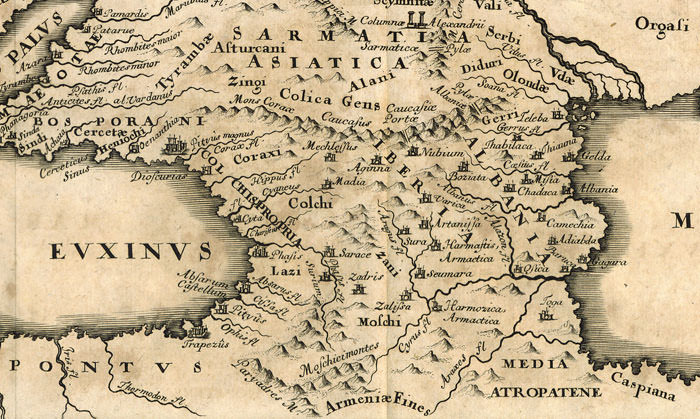
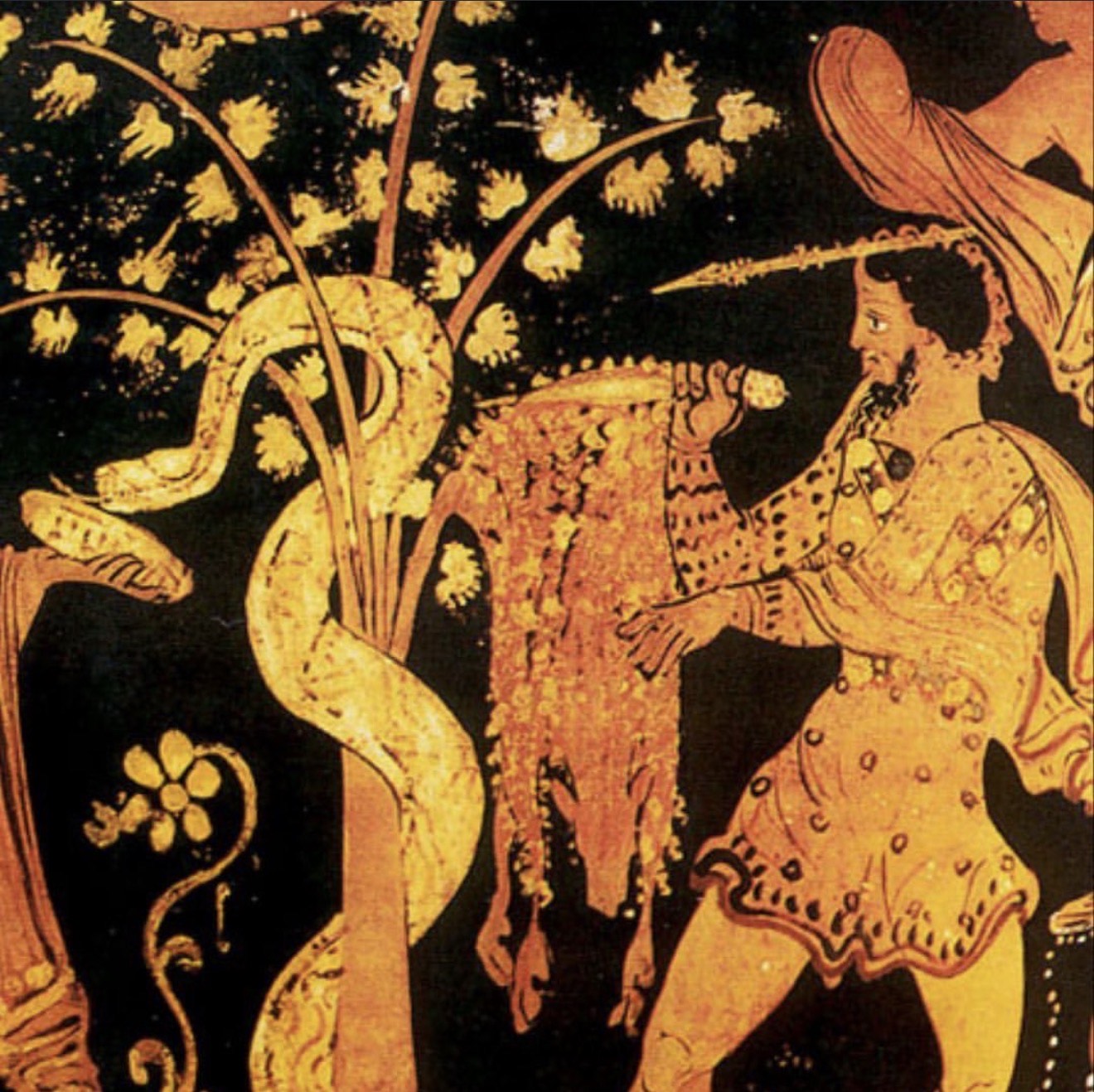
In Greek myth, the Golden Fleece belongs to the remote land of Colchis, hung in a sacred grove and guarded by a sleepless dragon. It derives from the ram sent by the gods, whose skin becomes the token of legitimate kingship. Jason is charged with retrieving it to reclaim his inheritance, a task that proves impossible without the aid of Medea, daughter of the Colchian king and keeper of local ritual knowledge. The voyage of the Argonauts thus frames the fleece as an object reached only by crossing boundaries—geographical, social, and existential.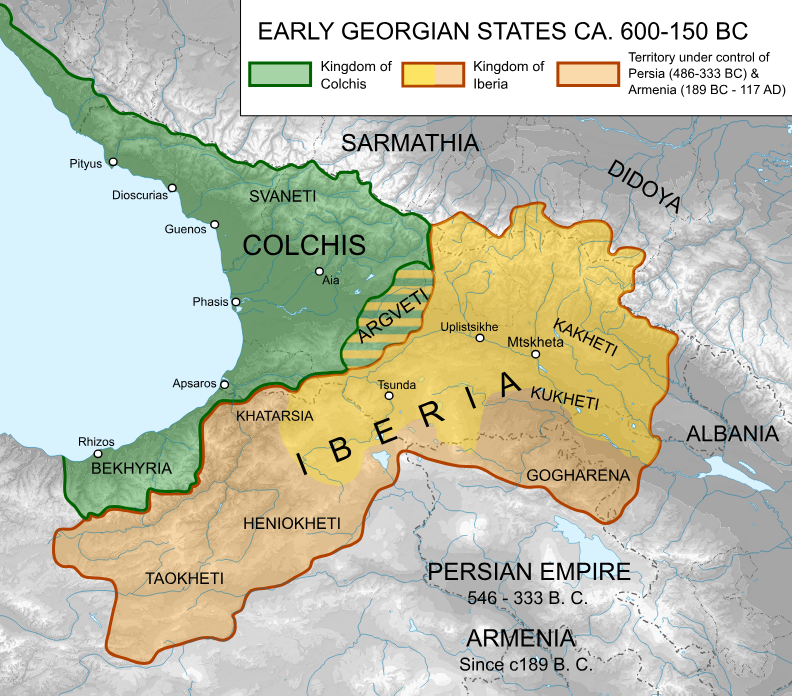
Surface interpretation.
Read at face value, the Golden Fleece is a heroic prize: a marvelous golden skin whose possession confers authority and glory. The dragon is a monster to be outwitted, Medea a love-struck helper, and Jason the clever hero who wins through courage and guile. In this register the myth functions as an adventure tale about rightful rule, foreign danger, and the triumph of ingenuity over brute force—an exemplary saga of aristocratic heroism and dynastic restoration.Mystery interpretation.
Through a Hellenic mystery-cult lens, the fleece is not decorative gold but a charged skin—an animal substrate saturated with potency and guarded by a dragon (δράκων) understood as a temple-guardian rather than a beast. Colchis represents a pharmakological borderland where animal skins, wool, dyes, minerals, and venoms are worked into ritual technologies. Medea is the initiatrix who prepares Jason’s body and timing; Jason is the ritual subject who undergoes proximity to death and returns transformed. To “take the fleece” is to complete a guided descent-and-return, carrying back embodied gnosis (γνώσις) and sanctioned power. The myth preserves both the promise and the peril of such rites: potency requires guidance, and when the initiatrix is abandoned, the system turns destructive.
Discussion
Classicists broadly agree on several points that already move away from a naïve fairy-tale reading:
- Greek myth preserves ritual memory, not just stories.This is foundational to 20th-century scholarship (e.g., Walter Burkert, Jean-Pierre Vernant).
- Colchis is treated in Greek literature as a liminal, archaic, foreign ritual zone, associated with dangerous γνώσις, roots, drugs, and altered states.
- Medea is consistently portrayed as a φαρμακίς (drug-expert), not merely a “witch” in the later medieval sense.
- The fleece is guarded in a sacred grove, not a battlefield—already signaling cultic, not heroic, logic.
None of that is controversial.
What the mystery interpretation draws from (explicitly)
a) Greek ritual theory
From Burkert and Vernant:
- Myth encodes rites of danger, transition, and controlled death
- Heroes often behave like initiates, not warriors
But those scholars avoid reconstructing technique.
b) Ancient pharmacology and ritual craft
From medical and magical corpora:
- Animal skins and wool were used as absorptive and transdermal media
- Substances were applied, worn, wrapped, or bound to the body
- “Guarded objects” often protect dangerous knowledge, not treasure
This is not speculative; it is attested practice—just rarely connected to heroic myth.
c) Tragedy itself
In Medea, Medea’s power is explicitly:
- preparation,
- timing,
- compounds,
- immunity and destruction depending on context.
Euripides treats her as a ritual technician whose knowledge cannot be safely separated from her person. That logic is already mystery-logic.
d) Comparative initiation patterns
Across Greek cults:
- descent → danger → guidance → return
- guardian figure dragon (δράκων)
- initiatrix or guide
- proof object or mark of completion
Jason’s fleece fits this structure unusually cleanly.
The synthesis is the integration of those strands into one reading:
- treating the fleece as materially operative, not just symbolic
- reading the dragon (δράκων) as guardian-priest language, not zoology
- interpreting Medea as initiatrix, Jason as ritual subject
- placing Colchis within an Echidnaic / pharmakon border culture
That step is not stated outright in LSJ, Euripides, or Burkert—but it follows their data without violating it.
In other words:
- it is philologically legal
- ritually coherent
- historically plausible
- but academically conservative fields stop short of it
Why this mystery reading matters
Because otherwise you are left with absurdities:
- Why is kingship based on a sheep skin?
- Why is a monster guarding it in a grove?
- Why does Jason succeed only after bodily preparation?
- Why does abandoning Medea collapse everything?
The mystery reading explains all of that without supernaturalism and without moral allegory.
In Myth and Lore
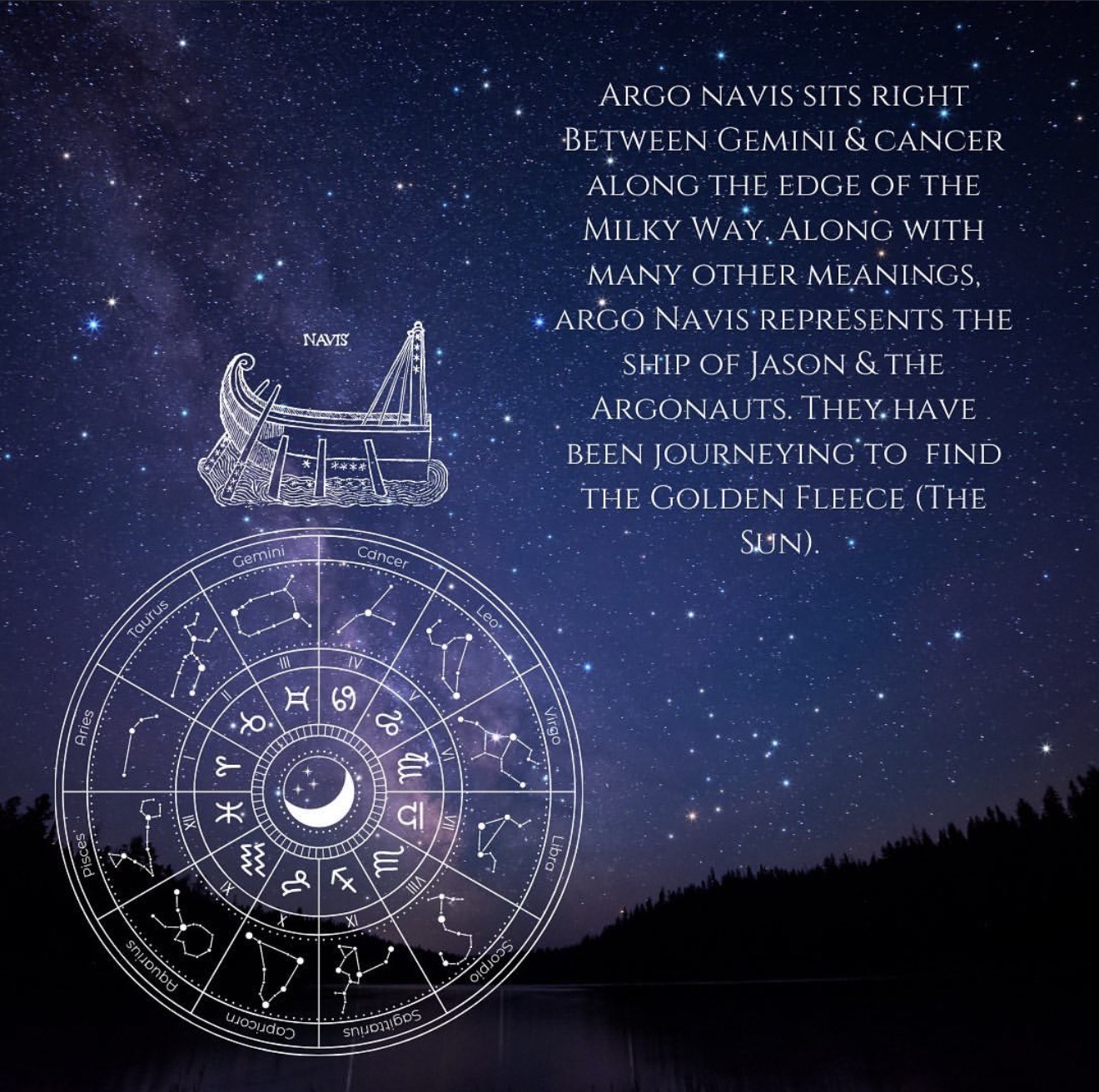
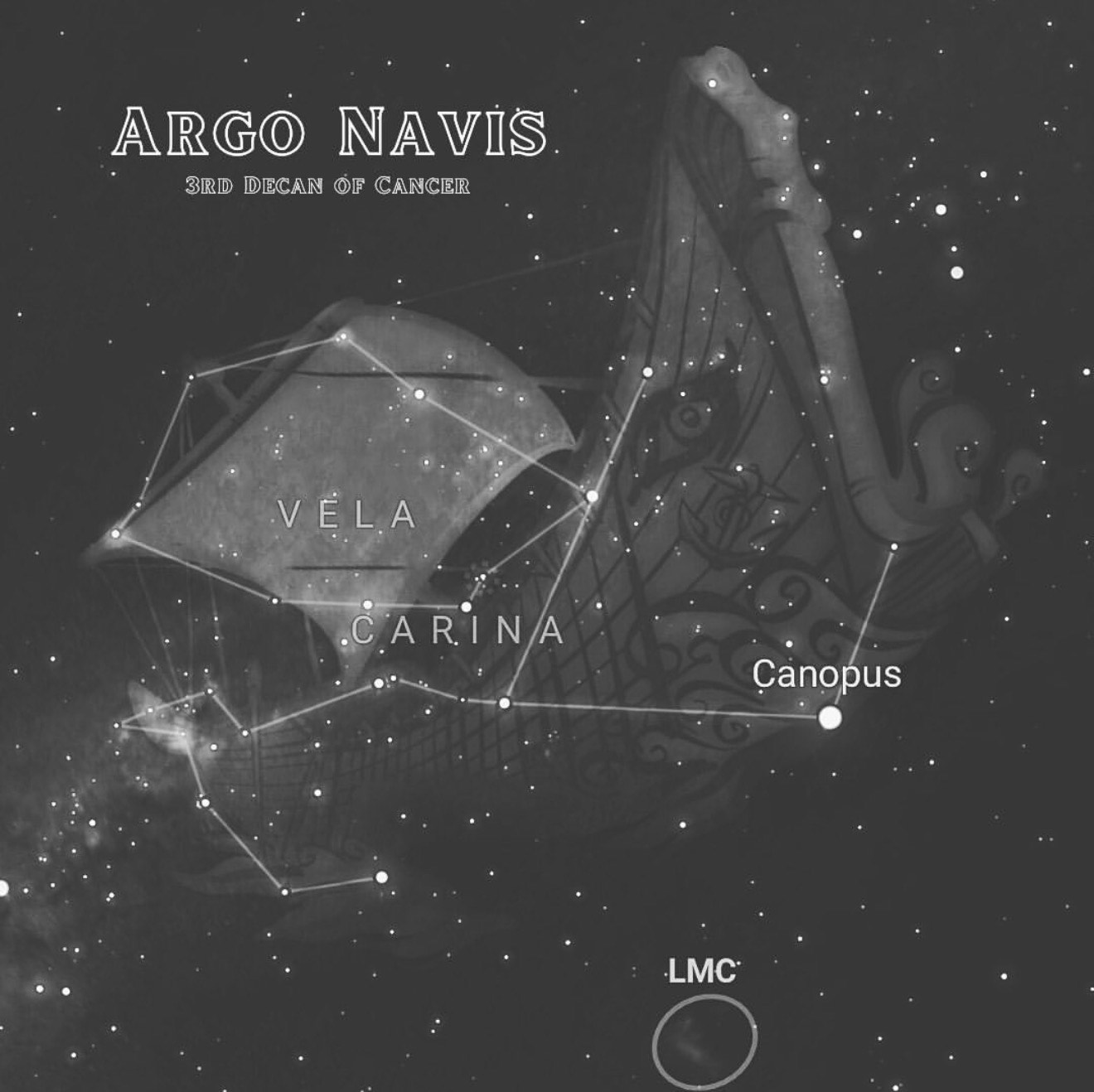
someone engaged in a dangerous but potentially rewarding adventure
Argonaut (n.)
(Greek mythology) one of the heroes who sailed with Jason in search of the Golden Fleece
Argonaut (n.)
cephalopod mollusk of warm seas whose females have delicate papery spiral shells
Synonyms: paper nautilus / nautilus / Argonauta argo
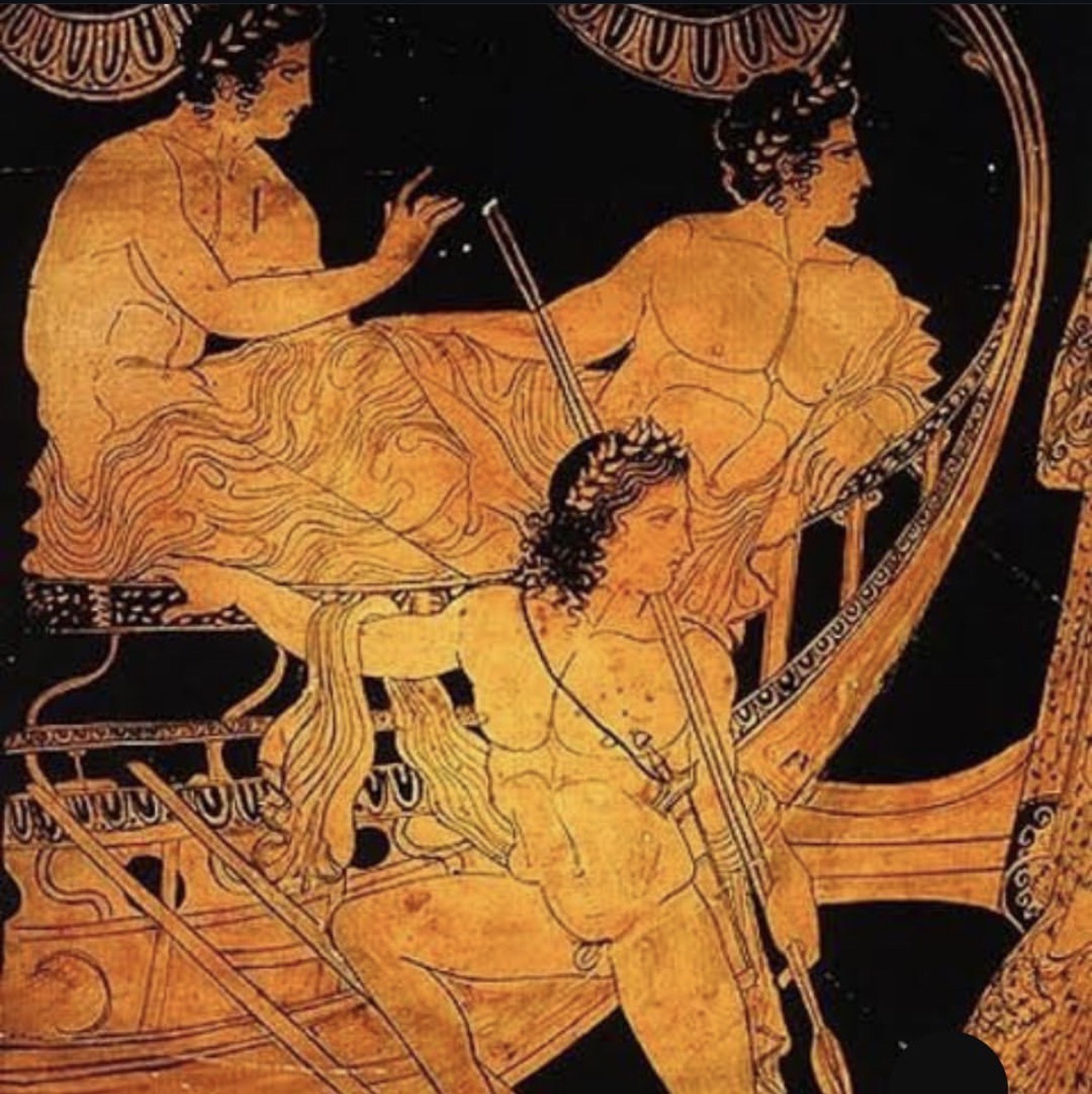
name of the ship in which Jason and his 54 heroic companions sought the Fleece in Colchis on the Euxine Sea, in Greek, literally "The Swift," from argos "swift" (adj.), an epithet, literally "shining, bright" (from PIE root arg- "to shine; white"), "because all swift motion causes a kind of glancing or flickering light" [Liddell & Scott].
Related: Argean.
nau-
nau-, Proto-Indo-European root meaning "boat."
It forms all or part of: aeronautics; aquanaut; Argonaut; astronaut; cosmonaut; nacelle; naval; nave (n.1) "main part of a church;" navicular; navigate; navigation; navy; naufragous; nausea; nautical; nautilus; noise.
It is the hypothetical source of/evidence for its existence is provided by: Sanskrit nauh, accusative navam "ship, boat;" Armenian nav "ship;" Greek naus "ship," nautes "sailor;" Latin navis "ship;" Old Irish nau "ship," Welsh noe "a flat vessel;" Old Norse nor "ship."
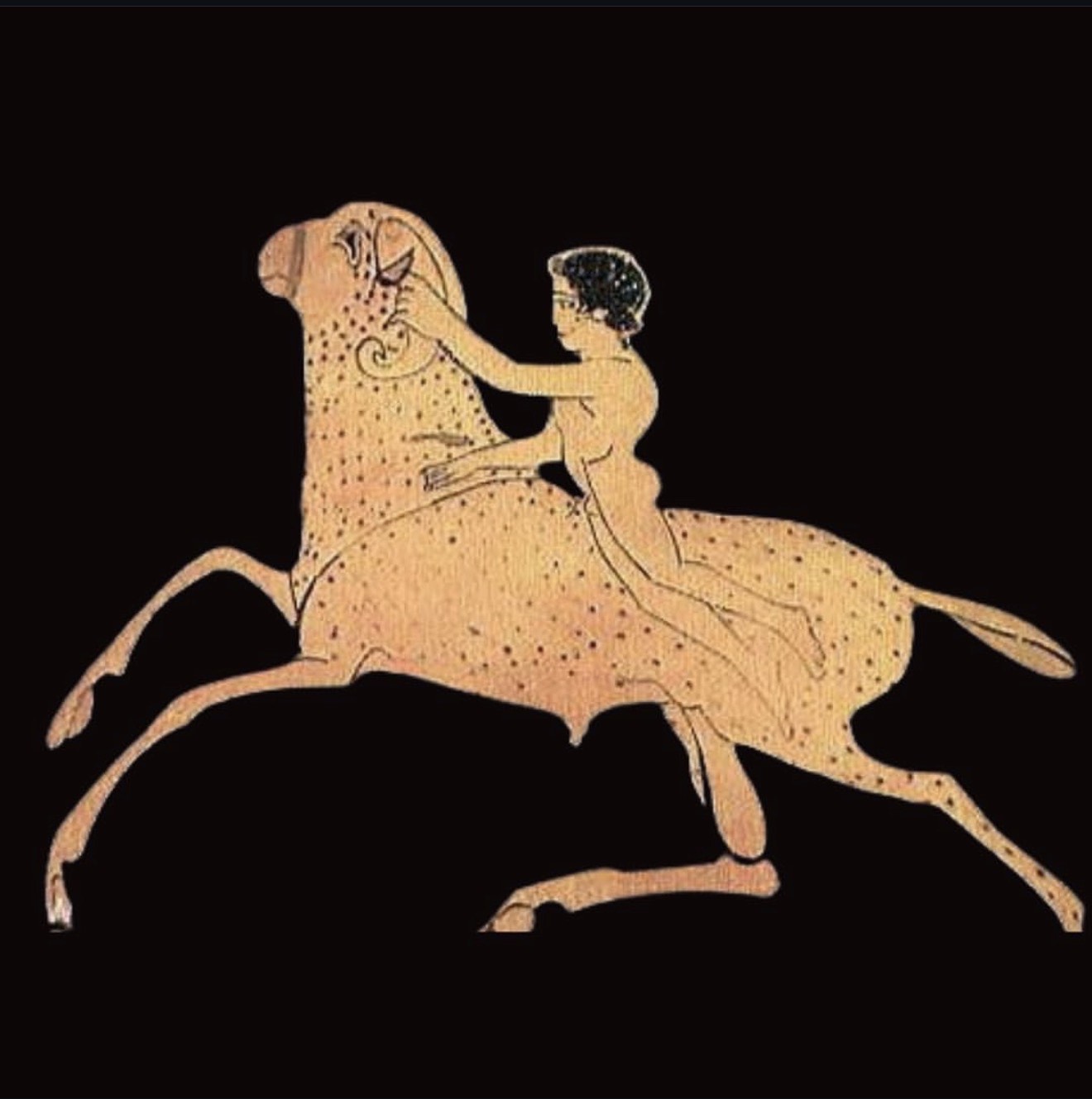
Krios Khrysomallos was a magnificent Golden Ram who could fly. He was sent by Nephele in order to save her Children Phrixos & Helle from being sacrificed. After Krios had saved them he ordered Phrixos to sacrifice him & lay his fleece in the grove of Ares. Afterwards he was placed in the Heavens as the Constellation Aries.
Eventually the Golden Fleece would be the object Jason and the Argonauts would obtain on the order of King Pelias to gain his rightful claim to throne of lolcus.
In his Odyssey Jason had help from the Argonauts including Argus; the builder of Argo; Augeas whose Stables would later become a Labour of Heracles who was also was part of the Argonaut crew. And the Dioscuri Castor & Polydeuces/Pollux.
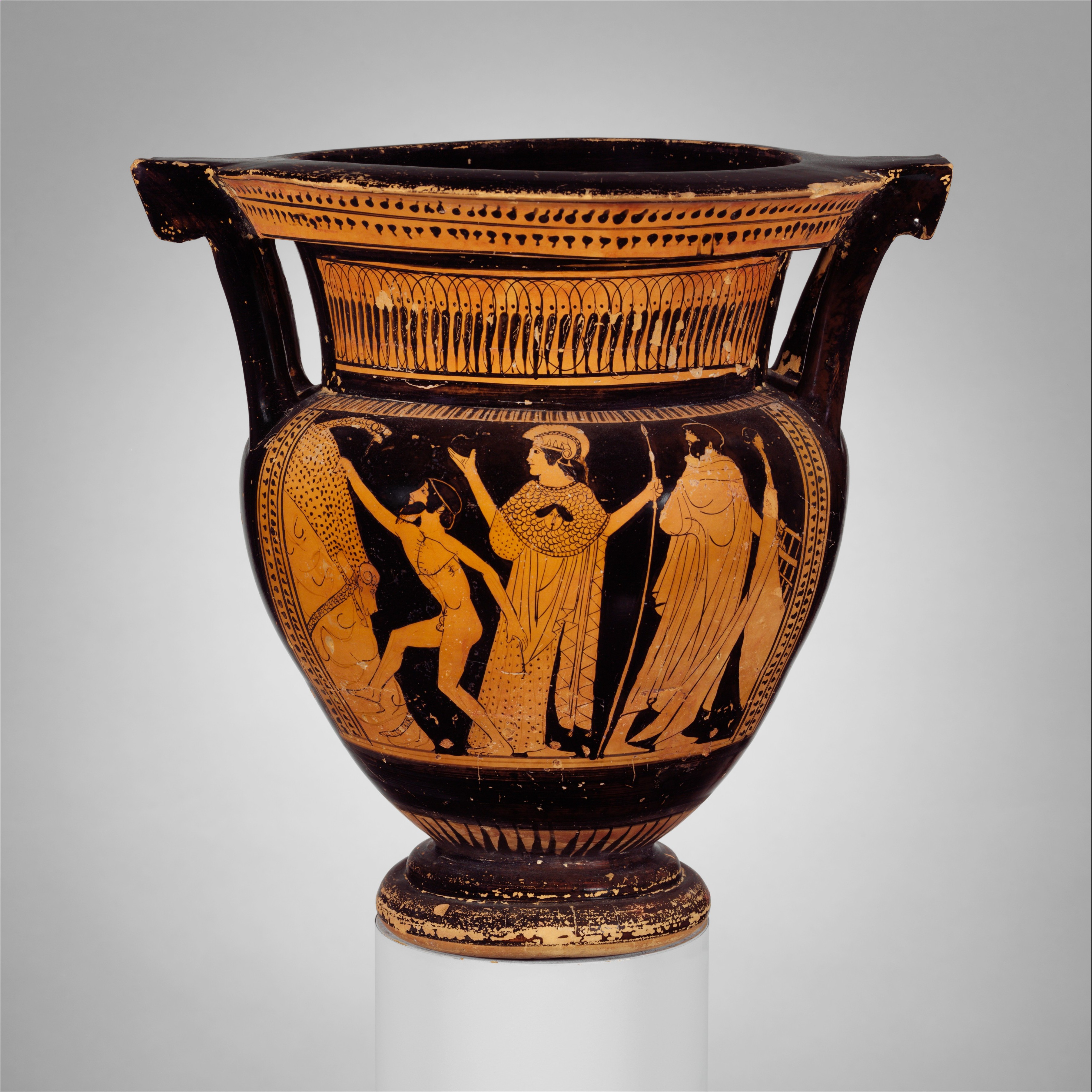
Further along Jason & the Argonauts would have to subdue & kill the Dragon or Giant Serpent in some sources Kholkikos (Colchian). With Athena's aid as well as Medea & the Argonauts, he is victorious.
Is Nephelē related to Nephilim?
Consider the idea that the Nephelē is the Greek Septuagint's Nephilim.
We'll never know. But examined under an initiatory framework, there's parallels beyond the similar sounding Greek name.
Nephelē intervenes from the upper register (οὐρανός): she prevents a literal sacrifice by substitution, sends a flying ram, and completes the action in katasterism (placement among the stars). This is classic initiatory grammar—danger, substitution, ascent, and reintegration—where “rescue” marks proper conduct of the rite, not abolition of it. Nephelē is thus a guide of transition, aligned with vision, concealment, and elevation.
The Nephilim, read through the Greek Septuagint, appear as Giants/Dactyls (γίγαντες) - figures of initiatory knowledge. In Greek mythic logic, such figures overlap with rite-specialists (Dactyls, Telchines, culture-bearers): humans mythologized because they know how to administer the pharmakon—a knowledge that can kill if misused or transform if guided. When read this way, the Nephilim are not merely violent monsters but threshold operators whose failure or misuse becomes catastrophic, while Nephelē represents the successful administration of the same liminal passage. Both belong to a shared Hellenistic symbolic economy: one shows right conduct of initiatory danger (substitution → ascent), the other preserves memory of excess power when such knowledge exceeds guidance.
Νεφέλη (Nephelē)
Νεφέλη is a transparent Greek noun meaning cloud, mist, vapor. It belongs to a well-attested Greek semantic family (νεφέλη, νεφέλας, νεφελώδης) associated with obscuration, condensation, and liminality—that which both conceals and mediates visibility. In mythic usage, Νεφέλη functions exactly in line with this semantics: she operates from the upper register (οὐρανός), intervenes through veiling and substitution, and enables ascent. Etymologically, the word denotes a medium—not an agent of force, but a condition that allows transformation to occur (vision, concealment, elevation).
Νεφιλίμ (Nephilim) — treated as fully Greek
Read as a Greek plural noun, Νεφιλίμ exhibits a phonological and semantic alignment with Greek roots built on νεφ- / νεφιλ-, overlapping the same cloud–mist–opacity field as νεφέλη, but intensified and personified. As a plural collective, Νεφιλίμ naturally denotes beings characterized by the νεφ- condition—those of the cloud / within the mist. Within Greek mythic grammar, such formations routinely mark liminal human figures elevated into myth (compare συλλογικά plurals for cultic or technical classes). In the Greek Septuagint, these Νεφιλίμ are glossed as γίγαντες, not as a size descriptor but as a category of excess potency—figures whose defining trait is too much capacity (knowledge, force, technique) for ordinary human limits.
- Νεφέλη names the medium (cloud, concealment, upper liminality).
- Νεφιλίμ names beings constituted by or operating within that medium.
In Greek, it is entirely normal for a cosmic medium to become a named agent without any change in semantic core. νεφέλη begins as a common noun meaning cloud, mist, concealment, but in mythic usage it is personified through narrative function, not orthography. The name Νεφέλη does not arise from capitalization or scribal marking, but from role activation: the medium itself is treated as acting. Greek myth regularly allows abstract conditions (cloud, night, fate, strife) to operate as agents when they intervene in events. Thus, Νεφέλη is not “cloud turned into a character,” but cloud functioning intentionally. The semantic content remains constant; what changes is grammatical agency, not meaning.
Nephelē and Nephilim are related
From a Greek etymological standpoint, Νεφέλη and Νεφιλίμ are coherently related: the former names the cloud-state that mediates transformation, the latter a collective of cloud-conditioned beings whose excess capacity renders them mythic. Both belong to a single Hellenistic symbolic logic of liminality, concealment, and dangerous knowledge, differing not by origin but by function and grammatical role within Greek mythic language.
Syncretism into later traditions
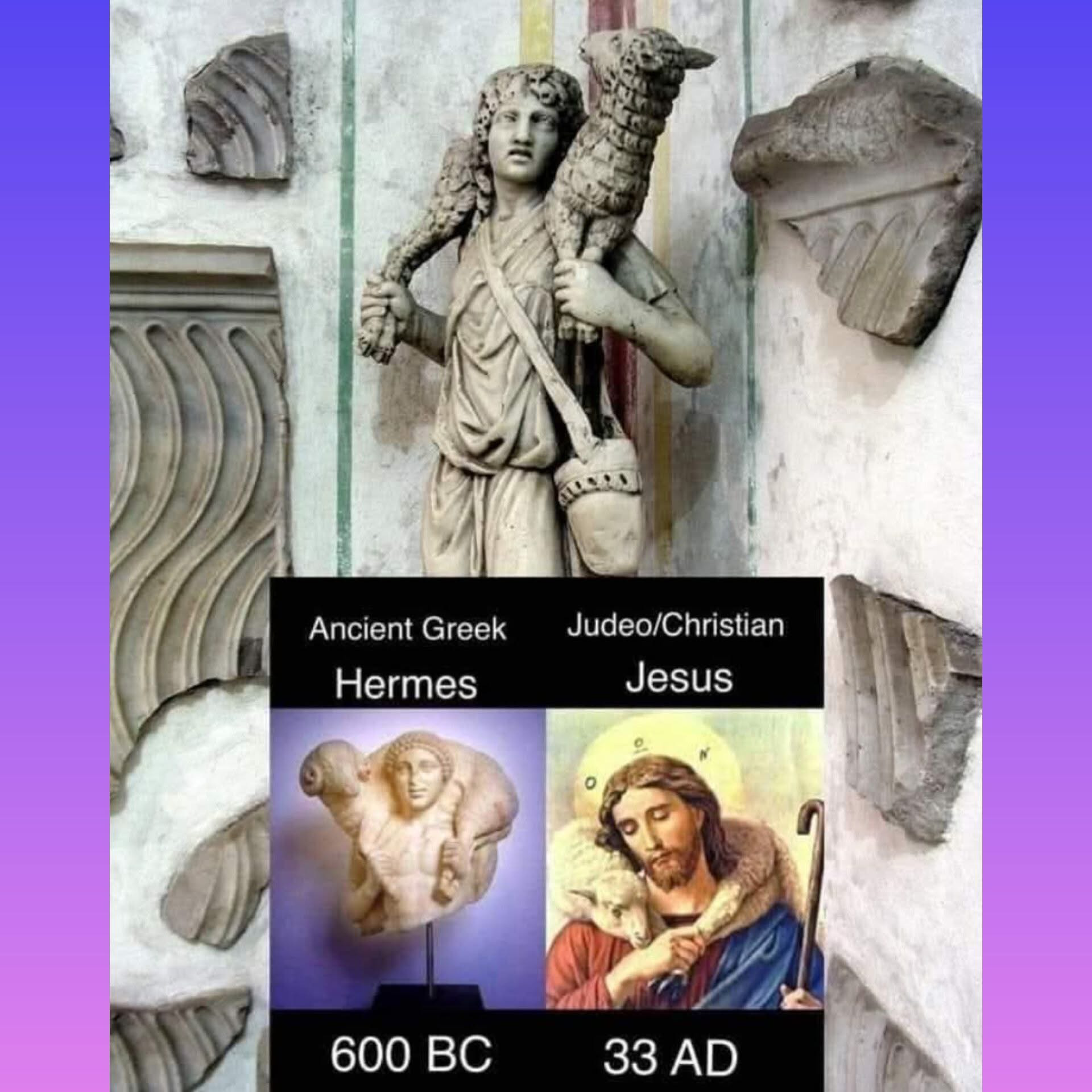
Hermes, and Jesus, and their connections to the lamb